A Lamp, a Chair and Ten Minutes: The Small Reset That Holds in November
November has a way of making every problem look like a lifestyle problem. The commute is damp, the kitchen is a disaster, your sleep is ragged, and suddenly you are pricing up a standing desk and a five-step morning routine. This is where sisu gets misunderstood. Endurance is not the same as escalation. Sometimes the most useful act of grit is to stop trying to fix your entire life before teatime and make one small, repeatable pocket of recovery instead.
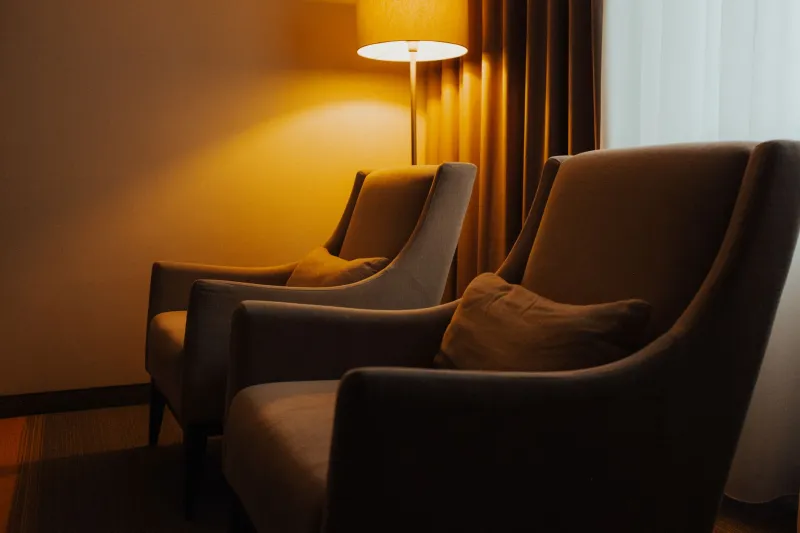
That is the case for the recovery corner. Not a spare room, not a renovated study, not a corner of the internet selling you linen. A chair, a lamp, a blanket and a timer, doing a modest job in a real flat during a dark November evening in 2026.
The Grand Overhaul Is a November Trap
The full life overhaul usually arrives with the dark. You decide you will rise at six, walk before work, batch-cook on Sundays, journal, stretch, and stop looking at your phone in bed. By Wednesday you are eating crisps over the sink and feeling like a failure. The problem is not your willpower. The problem is scale.
Sisu-style endurance is not built by dramatic gestures. It is built by what you can repeat when you are tired, late home, and slightly fed up. A recovery corner works because it asks almost nothing of you. It does not require a new identity. It requires a chair that is not covered in laundry and ten minutes you have decided not to give to anyone else.
The Kit Is Deliberately Small
You do not need much. A lamp with a warm bulb is better than the overhead light, which makes every room feel like a dentist's waiting area after 5pm. A blanket is not decorative. It is a signal to your body that the day has changed gear. A timer matters because it gives the ten minutes a shape, and because a phone timer is less tempting than a phone scroll.
The chair should be one you actually like sitting in, or at least one that does not make your back complain. A kitchen chair will do. A second-hand armchair will do. A floor cushion will do if that is what you have. The point is not comfort as a lifestyle aesthetic. The point is a physical place that is associated with stopping, not with tasks.
If the corner is buried under coats, bags or drying laundry, spend two minutes moving the pile. That is the room reset. The rest is sitting. Do not turn it into a cleaning sprint. You are not renovating your personality; you are moving a chair and claiming a small bit of floor.
Ten Minutes, Not a Lifestyle Brand
The ten-minute reset is not meditation homework. It is a deliberate change of pace. Put the phone in another room or face down out of reach. Turn on the lamp. Sit down. Set the timer. Then do something that is not work: read a few pages, stare at the wall, drink tea, listen to the radiator, breathe like a person who is not being chased. If your mind starts listing emails, let it. You do not have to empty your head. You just have to stay put until the timer goes.
This is the unsentimental bit. Ten minutes will not fix a bad job, a cold flat or a difficult family. It will, however, interrupt the evening's downward spiral. It gives you a small boundary between the working day and the rest of the night. Done often enough, that boundary becomes part of your environment rather than another thing you have to remember.
Small Flats, Shared Houses, Busy Kitchens
In a small flat, the recovery corner might be the end of the sofa nearest the window. In a shared house, it might be a stool in your room with a lamp on a crate. In a busy kitchen, it might be the one chair that is not currently holding a drying rack. The corner does not need to be beautiful. It needs to be yours for ten minutes.
If you live with other people, say what you are doing. Not in a dramatic way. A simple line works: I am taking ten minutes. It is surprising how often people will let you. If they do not, take the ten minutes anyway, with headphones or without. Recovery is not a reward for finishing everything. It is part of the work of carrying on.
The Sisu Bit
Sisu is often pictured as grim forward motion: head down, teeth gritted, kettle on. But endurance without recovery is just depletion with better branding. The Finnish concept is not only about pushing through. It is about knowing what keeps you upright for the long haul. A recovery corner is a practical expression of that. It says: I am not going to overhaul my whole life tonight, but I am going to look after the person who has to live it tomorrow.
So start tonight, badly. Move one thing. Plug in one lamp. Set a timer for ten minutes. Sit down before you have earned it. In November, that small act of stubborn care is often the most useful kind of grit.