Kettle On, Guard Down: The Three O'Clock Pause Worth Defending

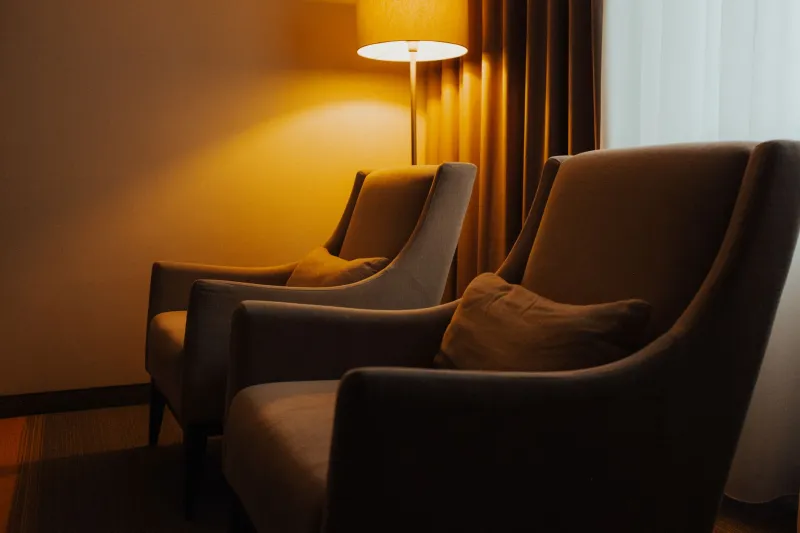
Photo by Photo by Hc Digital on Unsplash on Unsplash
There is a moment, somewhere around three o'clock in November, when the afternoon stops pretending. The light has already begun its slow retreat. The inbox has lost its novelty. The third coffee is a bad idea and everyone knows it. What the day needs is not another push. It needs a kettle.
Not a scroll. Not a meeting. A proper pause, with a mug in it.
The British tea break gets a rough press. It is treated as a quaint indulgence, a punchline about productivity, a thing to be apologised for in a performance review. But look at it plainly and it starts to resemble something else: recovery infrastructure. A small, repeatable, low-cost intervention that lowers the temperature of a working day and gives people a reason to stand up, look at each other and stop for ten minutes.
That is not softness. In sisu terms, it is maintenance.
The dip is real. The biscuit is optional
The mid-afternoon slump is not a moral failing. It is a predictable feature of a long day, made sharper in winter by early dusk and the temptation to stay pinned to a screen until the light has gone entirely. You do not need a clinical explanation to notice the pattern. You need only watch what happens in an office kitchen at ten past three.
A good tea break does three things at once. It interrupts stillness. It offers a small, bounded change of scene. And it creates a low-stakes point of contact with other people, which is often the part that does the most work without announcing itself.
The biscuit is not the point. The biscuit is a pleasant supporting actor. If you want the biscuit, have the biscuit. If you do not, have the tea. The ritual is the thing. The mug gives your hands something to do while your brain changes gear.
A ten-minute boundary with a handle
Most people do not struggle to make tea. They struggle to stop. The break gets postponed, compressed or swallowed by the next thing. Then it becomes a rumour of a break, taken at the desk, one eye on the screen, which is not recovery. That is just working while holding a mug.
Treating the tea break as infrastructure means giving it an edge. Ten minutes. A start and a finish. Not an hour of drifting, not a two-minute gulp. A boundary you can actually feel.
This is where sisu gets practical. Endurance is not only the capacity to keep going. It is also the judgement to know when going on is just grinding, and when a short stop will return you to the work with more of yourself intact. A break you never take is not a break. It is a debt.
The shared kitchen is not a conference room
There is a particular kind of conversation that happens while someone is waiting for the kettle to boil. It is sideways, unplanned and usually better for it. You find out how someone's week is going. You solve a small problem in two sentences. You discover that you are not the only person who found the morning ridiculous.
That is social contact doing quiet recovery work. It is not a team-building exercise and it should not be turned into one. The moment the tea break becomes a meeting with biscuits, it stops being a break.
Shared kitchens have their own etiquette, most of it unwritten and all of it improved by basic decency. Offer a round if you are making one. Do not colonise the only clear surface with your laptop and your lunch. Wash your mug. Leave the counter as you found it. These are small things, but they are the difference between a space that invites a pause and one that makes people take their tea back to their desks.
When the kettle becomes a hiding place
The defence of the tea break has a limit, and it is worth naming. Tea can be recovery. Tea can also be avoidance wearing a cosy cardigan.
You can tell the difference by what happens afterwards. A real break returns you to the task with a slightly cooler head. An avoidance break replaces the task with another brew, and then another, and then a sudden panic at half past four. If you have made four cups of tea and still not opened the document, the kettle is no longer infrastructure. It is a displacement activity.
The same goes for the conversation you are avoiding, the email you do not want to send, the walk you said you would take. Using the tea round as a reason to stay busy near the kitchen is not rest. It is a low-grade form of hiding. Sisu includes the bit where you put the mug down and do the difficult thing.
How to protect it
A few unsentimental rules help.
In the office, put the pause in the diary as a ten-minute block. Call it a pause, not a tea break, if that makes it easier to defend. Agree a rough time with one or two colleagues and rotate who makes the round. Keep it short enough that it does not need a justification.
In a shared kitchen, be the person who leaves it usable. A clean counter and a dry mug are a form of consideration that makes the next person's pause possible.
At home, the break needs a stronger border because the desk is always nearby. Stand up. Leave the room. Do not take the phone. If you can, step outside for a minute even if it is wet and dark, because November air is a useful reminder that the day is bigger than the screen.
If you work alone, the ritual still counts. Make the tea properly. Sit down to drink it. Look out of the window. Ten minutes of not producing anything is not a gap in the day. It is part of the day's structure.
And when someone asks if you are free at three, remember that I am back at quarter past is a complete sentence. You do not need to explain yourself into a corner.
Sisu is often pictured as a grim march into bad weather. But endurance without recovery is just damage on a schedule. The kettle is not a surrender. It is a small, sensible act of repair. Put it on. Then go back.