Bring the Broken Thing In: Recovery Lessons From a Church Hall Repair Bench
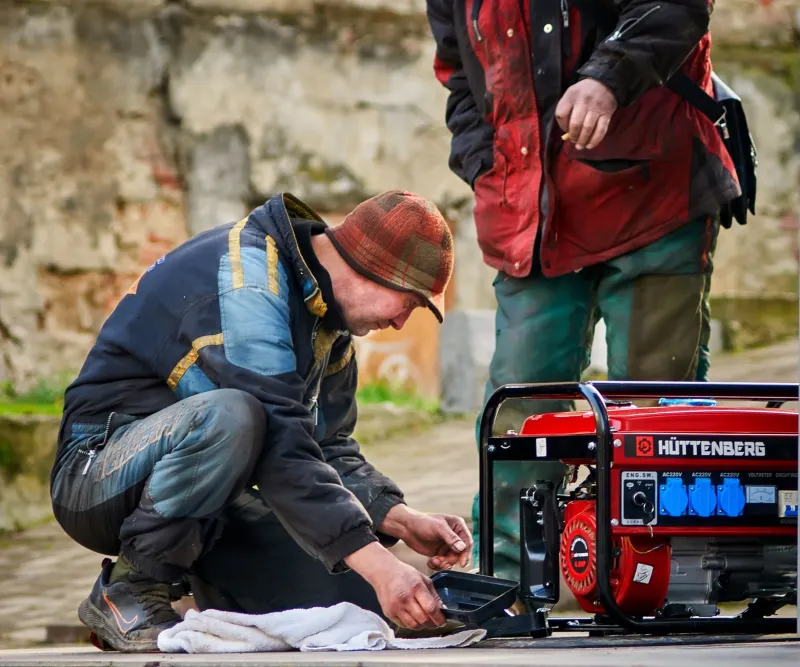
The toaster arrives in a supermarket bag, which is already a small confession. It has been carried through November rain to a church hall where the tea urn is doing its best and someone has taped a handwritten sign to a trestle table: Repair Café. The owner sets the bag down carefully, as if the appliance might be embarrassed.
‘It just stopped,’ they say. ‘No bang. No smell. Nothing.’
A volunteer in a fleece asks when it stopped, which socket it was plugged into, whether the lever stays down, whether the fuse has been checked. No one says ‘have you tried turning it off and on again’ unkindly, though they do say it. The toaster is not declared dead. It is placed on the bench and opened.
That is the first lesson, and it has nothing to do with toast.
The opposite of disposable
Most of us are trained to replace. The appliance is cheap enough, the repair is awkward, the new one can arrive tomorrow. We do the same with ourselves. A bad week arrives and we decide we are broken. We buy a new plan, a new gym membership, a new identity with a different sleep schedule. We throw out the old version before anyone has looked inside it.
Sisu is often translated as grit, which makes it sound like clenching your jaw and pushing harder. At the repair bench it looks more useful than that. It looks like staying with a problem long enough to understand it. It looks like patience with a screwdriver in your hand. Endurance is not the same as force. Before you force anything, check the fuse.
Fault-finding is not self-indulgence
The volunteer does not begin by unscrewing everything. He tests. He isolates. He says, ‘Let’s see where the power stops.’
This is a good question for a person in November. Where does your energy stop? Is it sleep, food, daylight, people, a deadline, a low-grade worry that has been running in the background since October? Recovery begins with specific diagnosis, not generalised shame. The toaster is not bad at being a toaster. It has a fault. You are not bad at November. You have a fault line, and fault lines can be found.
At the café, diagnosis is not treated as a delay before the real work. It is the real work. The same is true of recovery. A walk, a blood test, a conversation with a GP, a fortnight of proper lunches, a diary with one thing crossed out — these are not distractions from the serious business of feeling better. They are the serious business.
Ask the person with the multimeter
There is a moment when the owner wants to help and does not know how. The volunteer hands them a torch. That is all. Not helpless, not in charge. Just useful.
Community repair works because expertise is shared and nobody pretends to know everything. In wellbeing, asking for help is often framed as a last resort, the thing you do when you have failed to cope alone. At the repair café it is the first tool out of the box. Someone has the multimeter. Someone else has the right spanner. Someone knows that this model has a thermal fuse that fails before anything expensive does.
You do not have to be fixed by another person. But you do have to stop diagnosing alone. A friend, a colleague, a therapist, a neighbour with a ladder, a running club that goes slowly enough to talk — these are spare parts for a human week. Asking for them is maintenance, not melodrama.
Some repairs are partial
Not everything leaves the bench perfect. Sometimes the part is obsolete. Sometimes the toaster works but the crumb tray rattles. The café does not call that failure. It calls it a result: usable, understood, maybe due another visit.
Recovery is often partial. You go back to work before you feel a hundred per cent. Sleep improves before mood. The knee stops hurting before confidence returns. Sisu-style endurance accepts the partial repair. It does not wait for a factory-fresh version of you before allowing you to rejoin the week. It says: this is working better than it was, and that is worth having.
Maintenance is the unglamorous bit
The toaster will need emptying. The kettle will scale. The bike chain will dry. Maintenance is not a sign of weakness. It is the deal.
Yet we treat our own maintenance as optional. We skip lunch, cancel the walk, treat sleep as negotiable, and then act surprised when the lever will not stay down. A repair mindset says the small service is part of the machine, not an interruption to it. Ten minutes of daylight. A proper breakfast. A message to a friend. A boundary at six o’clock. Boring, effective, repeatable.
The repair café rule
The rule is not ‘fix everything’. It is ‘don’t discard before diagnosis’.
That is a decent rule for a November week. Bring the broken thing in. Put it on the bench. Let someone else look at it with you. Accept that the repair may be slow, partial, and due another visit. Keep the spare parts close: rest, food, daylight, company. None of this is heroic. All of it is endurance.
At the church hall, the toaster eventually clicks. The owner smiles, not because life has been transformed, but because the thing works and they understand why. The tea urn steams. Someone else arrives with a lamp that flickers. It is enough for a wet Saturday. Often, it is enough for a wet November too.